Hands-on is always best. In the kitchen you learn to cook by cooking. In the same way, the most effective way to learn about climate change is to actively measure and experiment with climate change processes. And that’s easy to do, especially if you have access to a few simple kitchen tools.
The sections of this web site cover five essential elements of climate change. Each includes a series of hands-on activities. Most of these activities are demonstrated with a video, and there are links to handouts, lesson plans, and other print materials as well. Most of the experiments can be completed with very simple tools. A few require slightly more specialized equipment, and links are provided to sources for that gear. This Prologue page provides some of the Big Picture background that helps to understand climate change in the context of our dynamic Earth and our own human relationship to it.
The Big Picture
Earth’s climate – and climate change – arises from the interaction of energy with the different parts of the Earth, and from the interation of those parts with each other. One common way to divide the Earth into parts is to consider four interacting “spheres:”
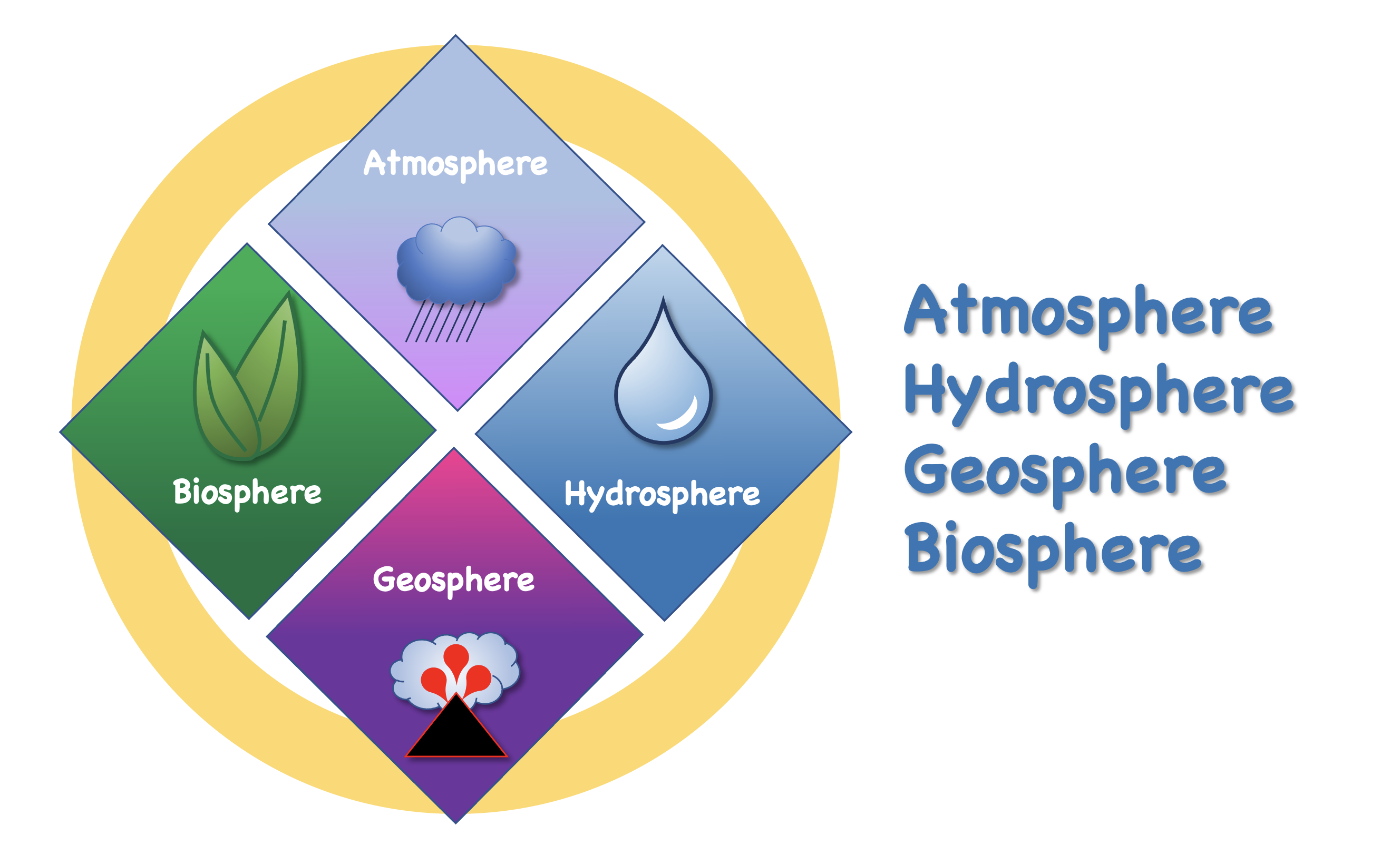
We can track energy and matter as it moves from one sphere to another. We can also examine the processes that move material and the consequences of that movement. Earth is often called a “system of systems,” because each of these spheres is dymanic within its own boundaries as well. This systems approach is useful for understanding nearly all of what happens on Earth, but here we’ll focus on processes that impact climate.
When we’re studying energy and motion, two other essential concepts are rate and scale. Some things happen quickly, some more slowly. Some things are very large, others very small. We’ll see lots of examples of different rates and scales in the activities presented in the six sections of this website. One of the most important underlying causes of climate change is a clash of scales; the juxtaposition of the very slow geologic cycling of carbon with the very fast human utilization of carbon-based fossil fuels.
If you’d like to jump right into the activities use the tabs at the top of this page. If you’d like to see the back-story of the geologic and human carbon cycles, check out the video below. And of course, you can go back and forth any time you’d like – this is your Kitchen.
-> Video coming Soon!
 Kitchen Climate Science